GREAT RIFT VALLEY · LAKE MANYARA ·TANZANIA
Five Worlds in One Park
The world's most extraordinary alkaline lake — birthplace of two million flamingos — overlooked by an active volcano the Maasai call the Mountain of God. One of East Africa's most remote and singular landscapes.
15+ years operating | Tanzanian Owned & Led | TALA Licensed | 27+ countries represented

BEST VISITEDYear-round · Peak Jun-Oct
|

PARK AREA325 km sq · Lake covers 70%
|

LOCATION2 hrs from Arusha
|

STATUSUNESCO Biosphere Reserve
|

WILDLIFE400+ species recorded
[ OVERVIEW ]
More Ecosystems per Kilometer Than Anywhere Else in the North
Lake Manyara sits at the foot of the Great Rift Valley escarpment — a 600-metre wall of ancient rock that looms over the park's western boundary and creates a rainfall shadow that produces a peculiar abundance. In the narrow corridor between the cliffs and the lake, five distinct habitats stack against each other: groundwater forest, acacia woodland, open floodplain, swamp, and the alkaline lake itself.
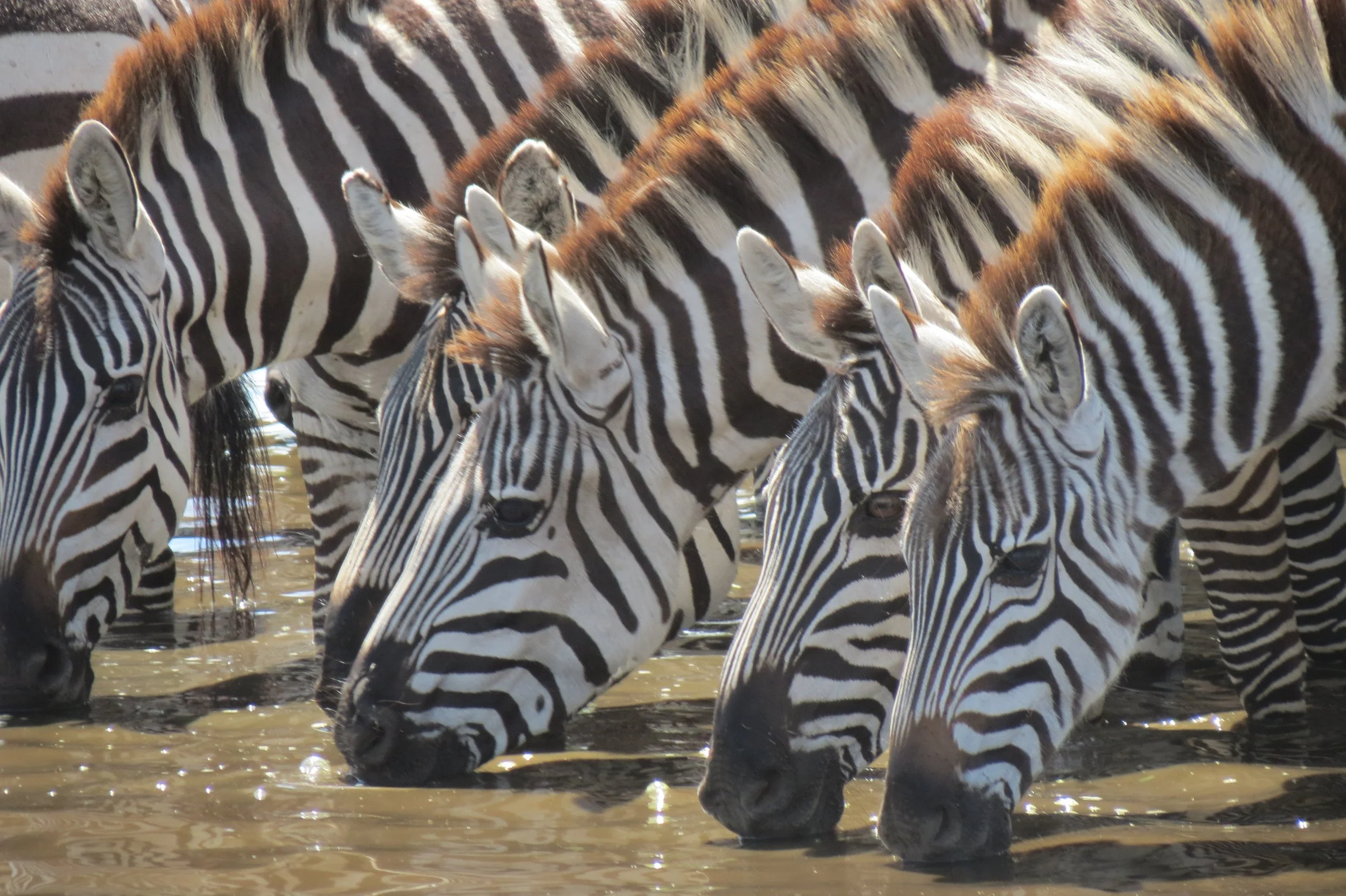
The result is an ecosystem that punches well above its size. Despite covering only 325 km², the park holds one of Tanzania's highest concentrations of wildlife per square kilometre. Elephant herds move through the forest canopy; hippos grunt in the shallows; giraffe and zebra cross the open floodplain; and on the lakeside margins, flamingos turn the water pink in their thousands.
"The Manyara escarpment changes the light in the late afternoon — the whole park turns gold, and the lake below it turns silver. It is one of the most beautiful hours in the northern circuit."
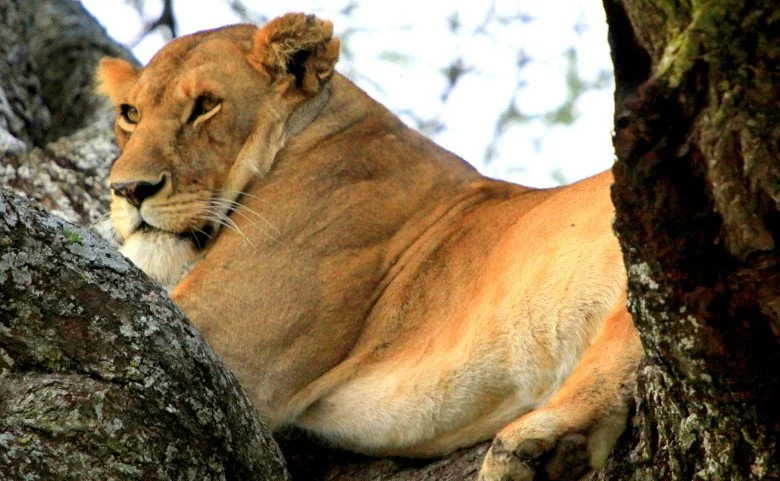
Lake Manyara is also where one of Tanzania's most talked-about wildlife mysteries still plays out. The park's lions — not all of them, not all of the time, but reliably enough to make it worth watching the branches — climb trees. No one has fully explained why. The behaviour has been documented here and in a handful of other African parks, but Manyara remains the most accessible place to witness it.
[ WILDLIFE ]
What You’ll Encounter at Lake Manyara
Manyara's diversity is its signature. A single circuit through the park can produce elephant, hippo, flamingo, giraffe, baboon, and a tree-climbing lion — often without backtracking.
Tree-climbing lion
Lake Manyara's most famous resident and one of Africa's most unusual wildlife behaviours. The park's lions are regularly found resting in the branches of acacia and sycamore figs — particularly in the mid-morning warmth. No one is certain why; theories range from avoiding ground insects to better vantage points for hunting. Your guide knows which trees to check first.

African elephant
Lake Manyara's forest elephants are a genuinely close encounter — the groundwater forest canopy compresses sightlines and brings animals nearer to the vehicle than they would be on an open plain. Herds here are habituated to vehicles, calm and unhurried. A good guide will position you where the light comes through the trees.
Flamingo
In the right season, the alkaline margins of Lake Manyara turn pink with flocks of lesser and greater flamingo numbering in the tens of thousands. Numbers fluctuate with water levels and seasonal conditions — your guide will know whether to seek them out along the lake road or on the open floodplain pools.

Hippopotamus
The hippo pools along the lake's freshwater inlets are among the most reliable in the northern circuit. Groups of 30 or more are common, best observed in the early morning when the animals begin to move. The sounds at close range — the territorial grunts and splashing — make it one of the most memorable stops in the park.
Masai giraffe
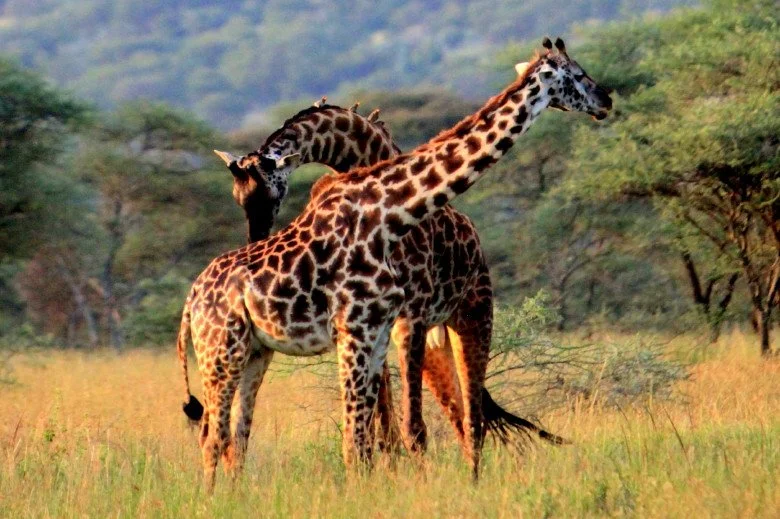
The open floodplains and acacia woodland south of the forest support large numbers of Masai giraffe — the tallest subspecies, with its characteristic jagged-edged patches. Manyara's giraffes are a regular sighting across much of the park's circuit and are particularly spectacular against the escarpment backdrop in the late afternoon light.

400+ bird species
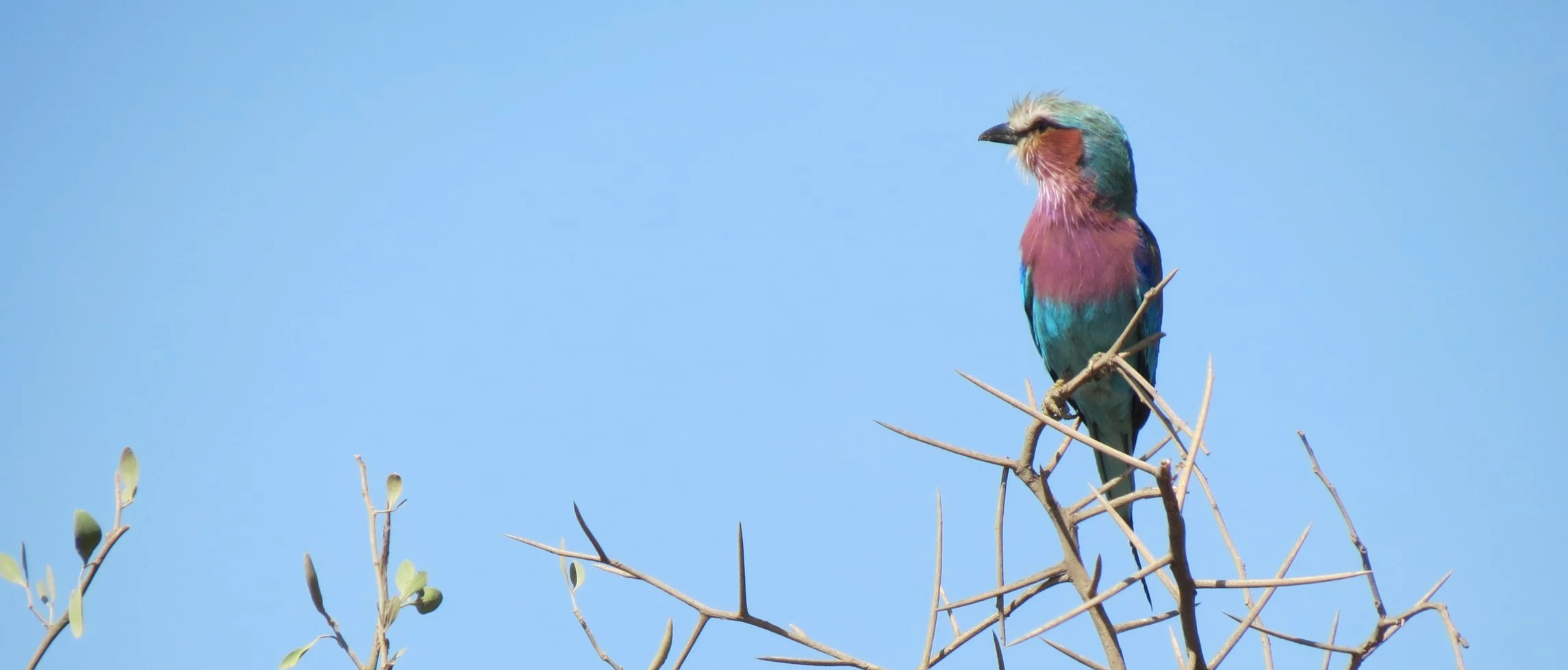
Lake Manyara is one of Tanzania's premier birding destinations — a UNESCO Biosphere Reserve partly on the strength of its avifauna. Resident species include the African fish eagle, the lilac-breasted roller, the yellow-billed stork, and the yellow-collared lovebird. The green season (November–April) brings large numbers of Palearctic migrants from Europe and Asia.
[ HABITATS ]
Five worlds in one circuit
No other park in the northern circuit packs this much ecological variety into a single game drive. Each habitat zone has its own wildlife, its own light, and its own character.
01
Groundwater forest
The park entrance drops you immediately into a dense, cathedral-like forest fed by springs that drain off the escarpment above. Fig trees, mahogany, and fever trees create a canopy that filters the light and harbours forest-dwelling elephants, olive baboon troops of several hundred, and the endemic Sykes' monkey. The forest is one of the most atmospheric places to begin a game drive anywhere in Tanzania.
02
Acacia woodland
South of the forest, yellow-barked acacia gives way to more open woodland — the habitat most associated with the tree-climbing lions. Impala, giraffe, zebra, and baboon move through here throughout the day. Watch the branches of the larger acacias carefully; a lion at rest in the canopy is easy to miss until your guide points to the tail hanging down.
03
Open floodplain
Where the woodland opens to flat, grassy plain along the lake's edge, wildebeest, zebra, impala, and buffalo gather in large concentrations during the dry season. The escarpment forms a dramatic backdrop to the west; the lake stretches to the horizon to the east. This is where the late-afternoon light is most extraordinary — long and golden across open water and grassland.
04
Hippo pools and swamp
A series of freshwater pools and seasonal swamp areas along the lake's northern and southern margins are permanent hippo habitat. African fish eagles perch in the riverside trees. Yellow-billed storks and sacred ibis wade the shallows nearby. These areas are also where the park's large buffalo herds concentrate in the dry months, drawing lions down from the woodland to hunt.
[ WHEN TO VISIT ]
Manyara rewards a visit in any season
Manyara's confined geography means wildlife is present and accessible throughout the year. The question is which aspects of the park you most want to experience.
DRY SEASON · JUNE - OCTOBER
Best for wildlife density
Vegetation thins and animals concentrate near the lake's permanent water. Buffalo herds of several hundred gather on the floodplain, drawing lion prides down from the woodland. The tree-climbing lion sightings are most reliably documented during the cooler dry-season mornings. The lake road is in its best condition for all vehicle types.
GREEN & MID SEASON · NOVEMBER - MAY
Best for birdlife and atmosphere
The short rains (November) and long rains (March–May) transform the park into a vivid, lush green. Palearctic migratory birds arrive from Europe and Asia in large numbers, and the resident birdlife is at its most active. Flamingo numbers on the lake can peak during wetter months. Visitor numbers drop significantly — the forest in particular is extraordinary with no other vehicles present.
Lake Manyara is most often visited as one day of a longer northern circuit safari. It pairs naturally with Tarangire to the south, the Ngorongoro highlands to the east, and Lake Natron beyond. Ask us about routing — the order in which you visit parks changes the rhythm of the trip.
Safaris that include Lake Manyara
Manyara sits naturally at the start or end of a northern circuit safari — two hours from Arusha and directly en route to the Ngorongoro highlands, Serengeti, and beyond.
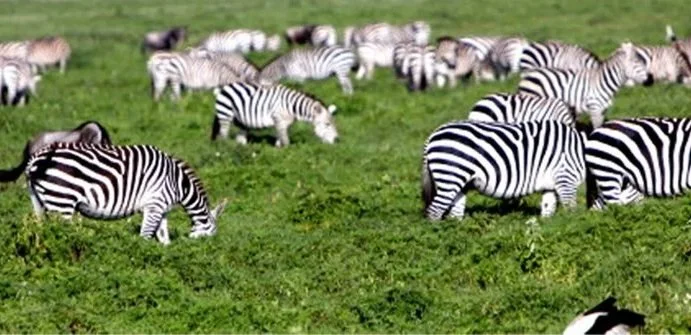
Northern Highlights 3 Days
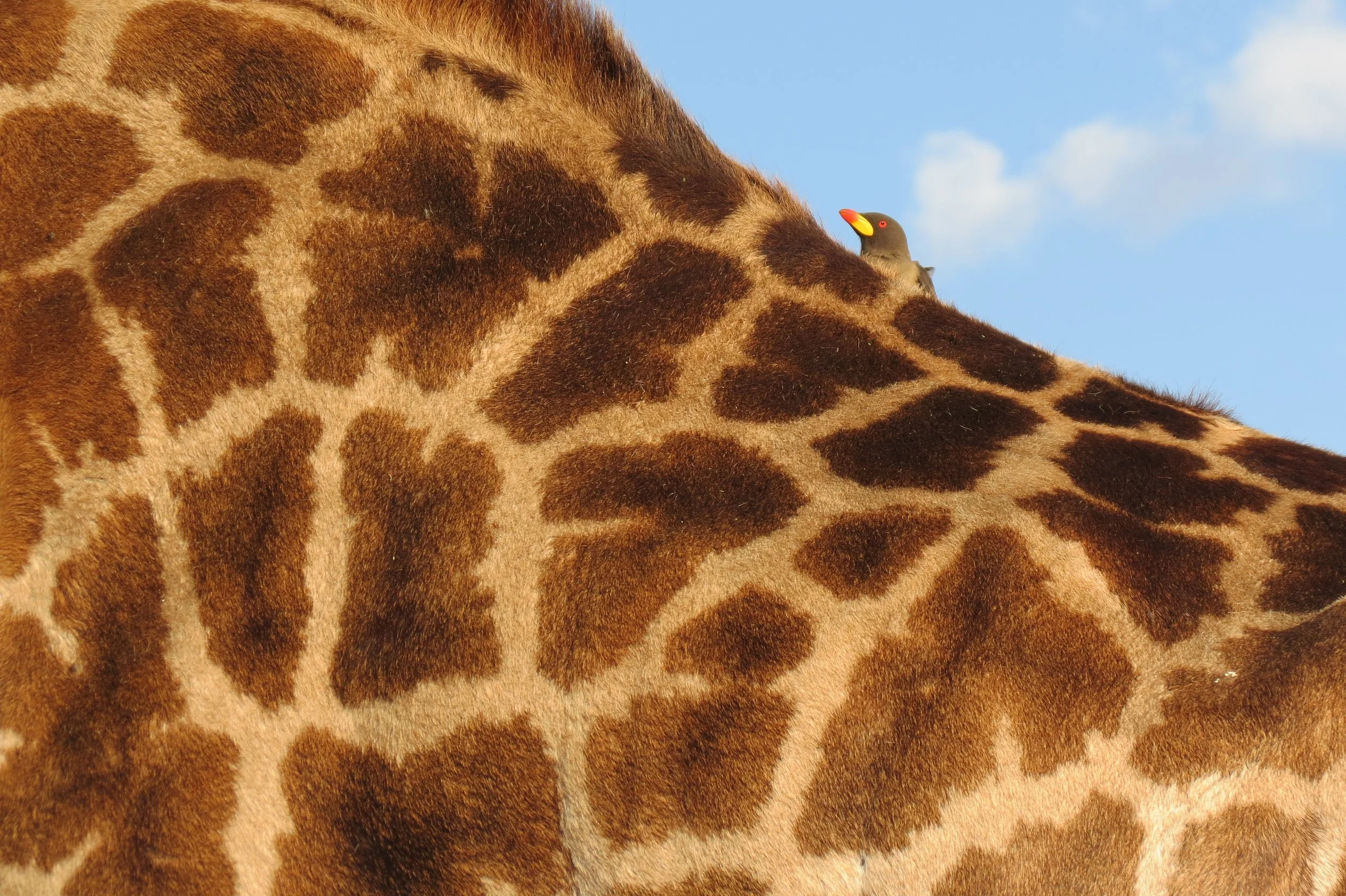
Classic Wildlife Safari 7 Days
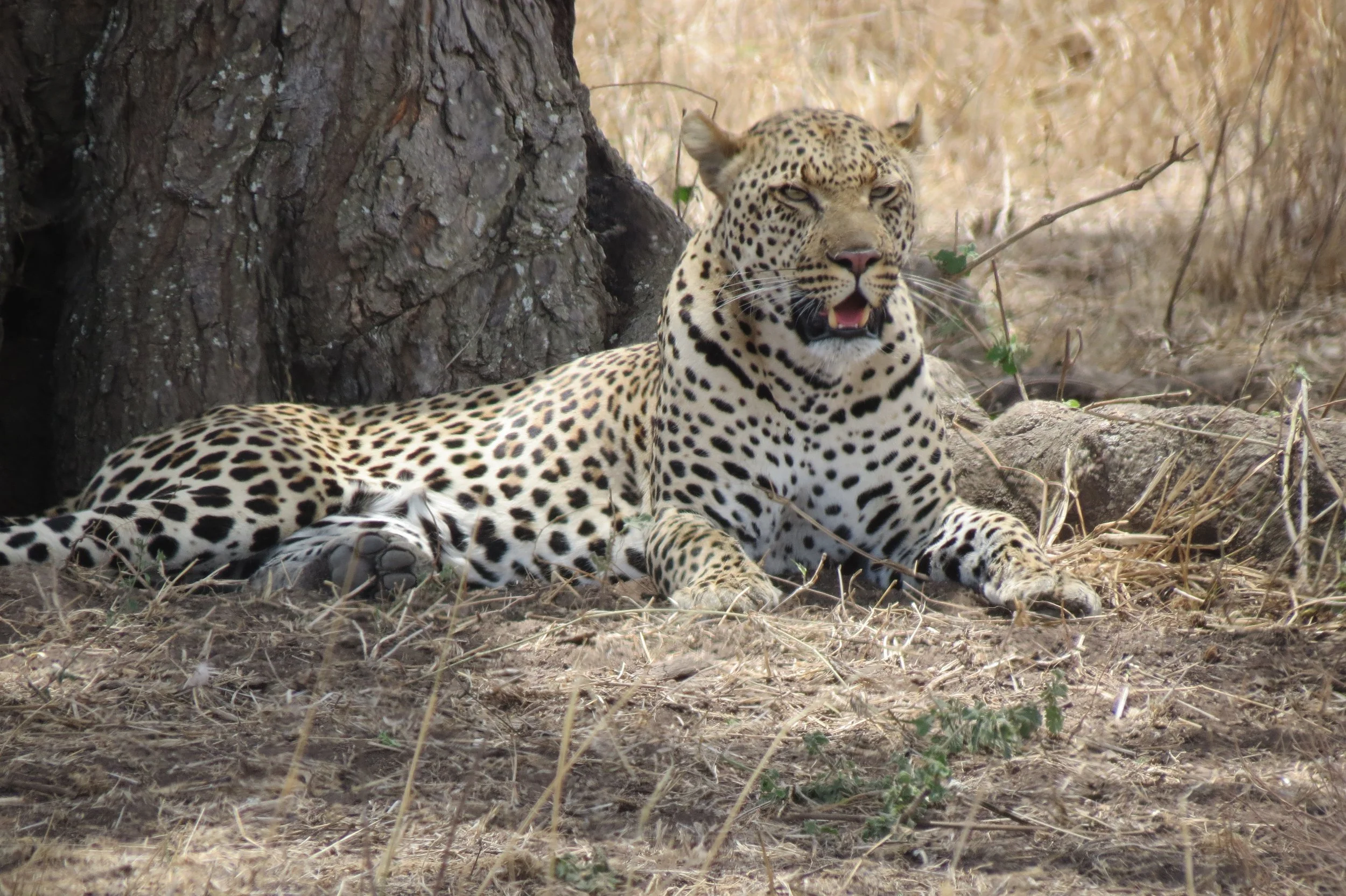
Signature Explorations 8-9 Days
Custom Safari Any Duration
[ CONSERVATION & CONTEXT ]
A small park with an outsized story
Lake Manyara's UNESCO Biosphere Reserve designation is not honorary. It reflects what is genuinely unusual about this place: the concentration of different ecosystems in a single compact park, and the research value that concentration provides
The park has been the subject of continuous ecological research since the 1960s, when Iain Douglas-Hamilton conducted his landmark study of elephant social structure here. The tree-climbing lion behaviour has attracted researchers for decades. The groundwater forest, sustained by springs that tap into the Rift Valley's underground water systems, supports species that are absent from the drier parks nearby.
As a Tanzanian-owned company, we understand that the economic value generated by responsible tourism in parks like Manyara funds the anti-poaching, community development, and management infrastructure that makes them viable long-term. Our guides drive Manyara's circuit with the patience and quiet that the park rewards — staying with animal sightings rather than rushing the route, and keeping vehicle distances that allow wildlife to behave naturally.
5
Distinct habitat zones in a single circuit — groundwater forest, acacia woodland, open floodplain, hippo pools, and the alkaline lake — making Manyara one of the most ecologically layered parks of its size in Africa.
400+
Bird species recorded within the park, giving Lake Manyara one of the highest species counts per square kilometre of any East African park. It is an Important Bird Area listed by BirdLife International.
600m
Height of the Rift Valley escarpment above the park's western boundary — creating the rainfall shadow and spring systems that feed the groundwater forest and hippo pools.
1960
Year Lake Manyara was gazetted as a national park, coinciding with Tanzanian independence and the beginning of continuous ecological research that has continued to the present day.
325
Square kilometres of total park area — of which the lake itself covers approximately 230 km², making it one of Tanzania's most water-dominated national parks.
[ FAQs ]
Questions About Lake Manyara
-
Honest answer: not guaranteed, but more reliable here than anywhere else in East Africa. The lions do climb trees in Lake Manyara — this is a documented, recurring behavior that has been observed for decades. The most productive strategy is an early morning drive through the acacia woodland, when the cats have been active overnight and seek elevated resting spots in the shade. A guide who knows the current pride movements and their favorite trees makes a significant difference. We've observed tree-climbing lions with many Manyara visitors; there are also trips where the lions were found on the ground. Either way, a lion sighting in Manyara is almost certain.
-
A full day is recommend to do the park justice — entering in the early morning, completing the lake circuit, and leaving after lunch. Manyara works well as the opening park on a longer northern circuit itinerary — two hours from Arusha, it is an ideal first game drive before heading south to Tarangire or east toward the Ngorongoro highlands.
-
Flamingo numbers at Lake Manyara are highly variable and depend primarily on water levels and salinity. In years when the lake is at the right depth and alkalinity, tens of thousands of birds gather along the shore. In drier years or after heavy rain, numbers can be much lower as the birds move between Manyara, Lake Natron, and other Rift Valley lakes. We always check current lake conditions before confirming flamingo expectations — if flamingos are a priority for you, Lake Natron is a more reliable destination, as it holds Africa's largest permanent flamingo breeding colony.
-
Guided walking safaris are available in specific areas outside the main park circuit, typically in the buffer zones near the escarpment. Canoe trips on the lake itself are possible through select operators and give an extraordinary perspective on the hippo pools and flamingo flocks from water level. If either of these is something you want to incorporate, let us know when we're designing your itinerary and we can arrange both the permit and the specialist guide. These activities are in addition to, rather than a replacement for, the standard vehicle game drive circuit.
-
Yes — all national park fees, including Lake Manyara entrance and conservation fees, are included in our safari prices. When you request a quote, we provide a complete breakdown of what is and isn't included so there are no surprises on the road. Park fees are set by the Tanzania National Parks Authority (TANAPA) and are non-negotiable government levies.
Let’s design your Lake Manyara visit
Tell us a little bit about your trip — when you’re thinking of traveling, what you most want to see, and whether Manyara is a focus or one stop of a longer circuit. No commitment. You’re engaging with a real person from the Misele Team who knows Tanzania safaris extensively. We will reply within 24 hours.
Your details are never shared. We respond personally, usually within a few hours.