5-6 DAYS | KILIMANJARO CLIMBMarangu Route
The classic hut route — shortest path to Uhuru Peak
DURATION5 or 6 Days
|
DISTANCE~75 km / 47 mi
|
ACCOMMODATIONMountain Huts
|
DIFFICULTYModerate
|
SUMMIT SUCCESS~60-70% ( 5 days)
5-DAY CLIMB FROM$1,697 pp
Group of 6 climbers
|
6-DAY CLIMB FROM$2,108 pp
Group of 6 climbers
|
Mountain Huts
PRE/POST-CLIMB HOTELStandard · Select · Premium
Arusha or Moshi
|
BEST PAIRED WITH
Northern Highlights, Zanzibar
Post-climb safari is the most requested
[ OVERVIEW ]
The most direct way to the roof of Africa
Marangu is Kilimanjaro's oldest established route and the only one where you sleep in huts rather than tents — a meaningful difference for climbers who'd rather not camp at altitude. It approaches from the southeast and follows the most direct line to Uhuru Peak, which is exactly what makes it both appealing and, on the standard five-day itinerary, the route most likely to be rushed.
We'll say plainly what most operators won't: Marangu's compressed profile gives your body less time to acclimatize than routes like Lemosho or Machame, and its summit success rate reflects that. The single best decision you can make on this route is adding the sixth day. One extra night at Horombo roughly doubles your acclimatization window for a modest cost — our guides recommend it for nearly every climber, and we'll always tell you honestly if your itinerary needs it.
Hut accommodation, every night
Good for first-time, high-altitude trekkers
Rainforest to alpine desert in one route
Shortest distance to the summit
KPAP-aligned porter practices
MARANGU IS A STRONG FIT IF
You prefer a bed and roof over a tent each night
You’re working with a shorter trip window
This is your first high-altitude trek and simplicity appeals
Budget matters and you’re booking a 6-day option
CONSIDER ANOTHER ROUTE IF
Maximizing your summit odds is the top priority
Your want to see Kilimanjaro from more than one side
You’d rather avoid the busiest route on the mountain
Not sure Marangu is right for you? Tell us your timeframe, budget, and trekking experience and we can recommend a route that fits — even if that means pointing you to Machame or Lemosho instead.
|
[ MARANGU VS. MACHAME ]
The two routes climbers compare most
If you’re weighing Marangu against another option, it’s probably Machame — Kilimanjaro’s most popular route overall. Here’s the honest difference.
ROUTE
Marangu
Machame
ACCOMMODATION
Huts
Tents
5-6
DAYS
6-7
~60-70% (5d), ~85% (6d)
APPROX. SUCCESS RATE
~90%
One approach & descent
SCENERY
Varied
Comfort, shorter trip
BEST FOR
Most popular, all-rounder
Success rate ranges are general estimates and can vary by operator, itinerary length, season, and individual fitness.
Comparing all the Kilimanjaro routes? See our full route comparison on the Kilimanjaro overview page.
[ ITINERARY ]
Six days, four climate zones
DAY 1
Marangu Gate → Mandara Hut
1,860 M → 2,720 M · 8 KM · 3-4 HOURS ·MONTANE RAINFOREST
Register at Marangu Gate and climb gently through dense rainforest hung with moss and orchid. Blue and black-and-white colobus monkeys move through the canopy overhead, and the Maundi Crater rim sits a short detour from Mandara Hut for anyone with energy left after arrival.
Colobus monkeys · Maundi Crater viewpoint
DAY 2
Mandara Hut → Horombo Hut
2,720 → 3,720 M · 11 KM · 6-7 HOURS · HEATH & MOORLAND
The forest thins into heather and giant lobelia as you climb into the moorland zone. On a clear afternoon, Kibo's snow-streaked summit and the jagged profile of Mawenzi Peak both appear above Horombo — your first real sense of scale for what's ahead.
First views of Kibo & Mawenzi · Giant Lobelia
DAY 3
ACCLIMATIZATION DAY
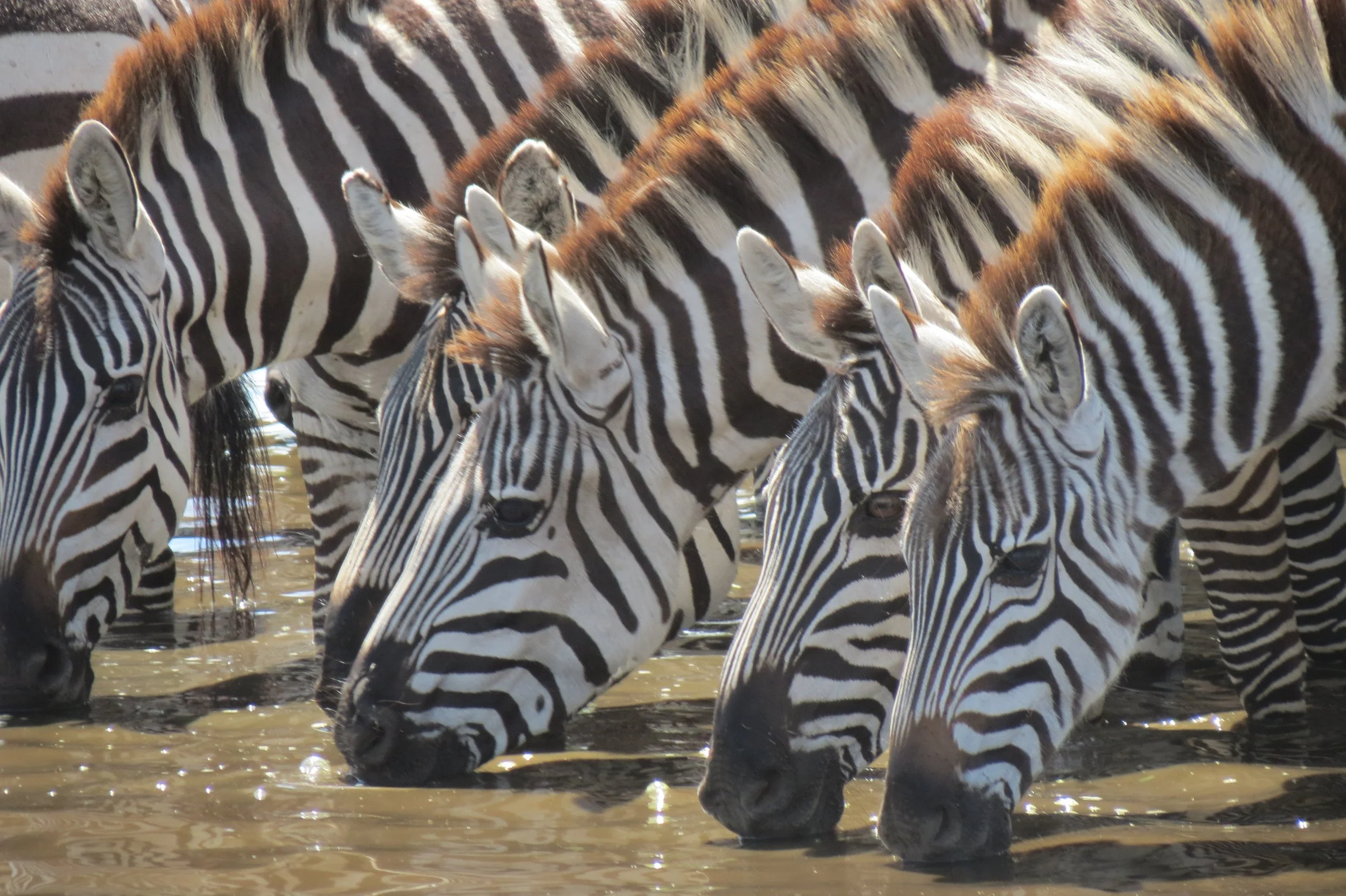
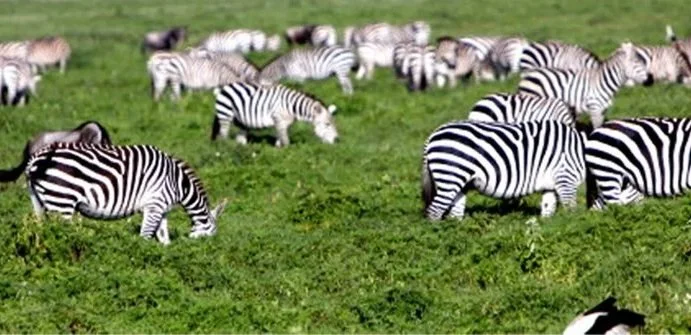
Horombo Hut → Zebra Rocks
START 3,720 M → HIKE TO 4,200 M → RETURN TO 3,720 M
This is the day we recommend most strongly. A short acclimatization hike toward Zebra Rocks or the edge of the Mawenzi ridge pushes your body to a higher altitude during daylight, then brings you back down to sleep — the single most effective tactic for adjusting to thin air before the real test begins. Climbers who add this day report a markedly easier summit push.
Zebra Rocks · Saddle views toward Kibo
DAY 4
Horombo Hut → Kibo Hut
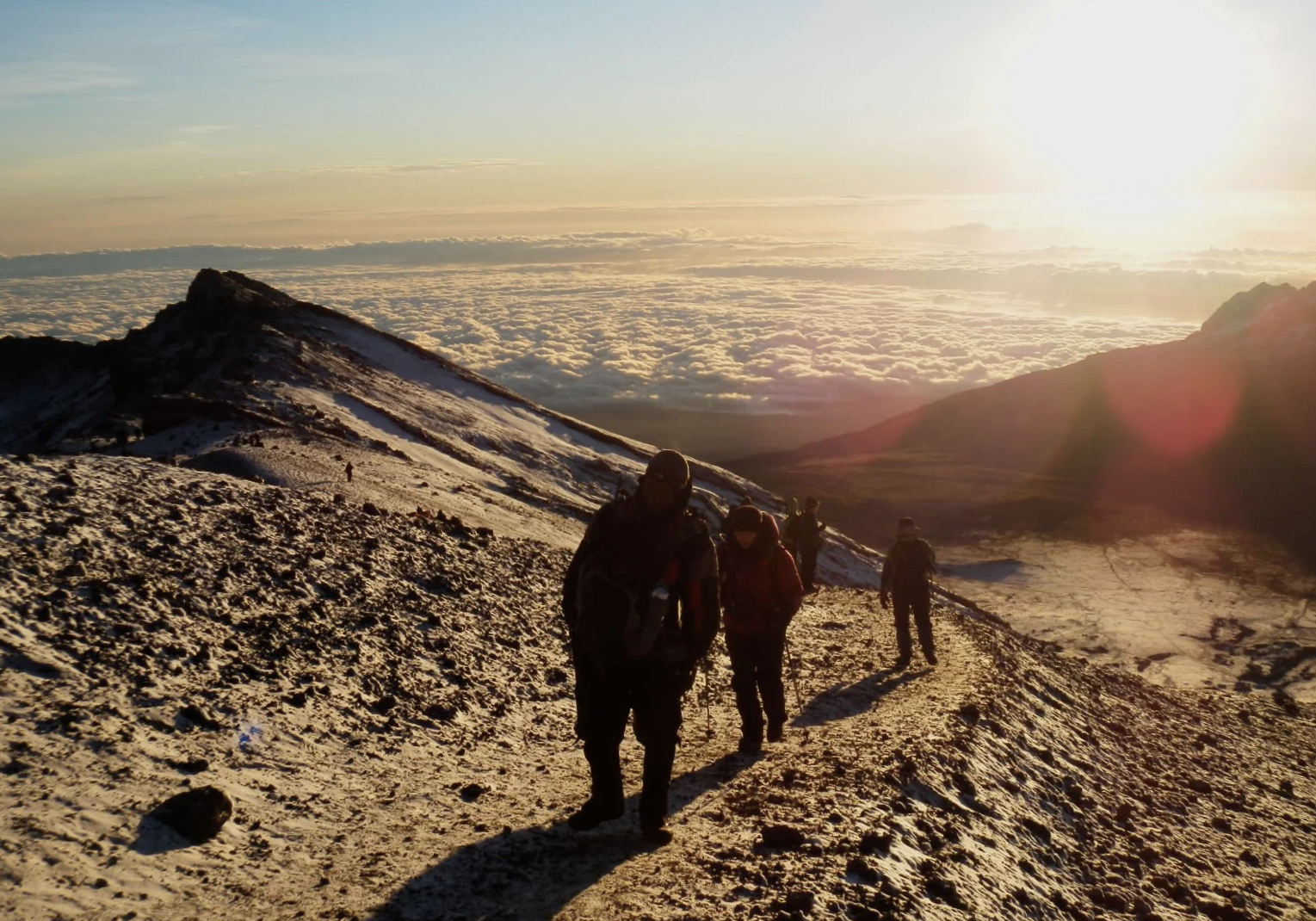
3,720 M → 4,720 M · 10 KM · 5-6 HOURS · ALPINE DESERT
Vegetation gives way entirely to volcanic scree and the stark alpine desert that defines Kilimanjaro's upper reaches. The pace deliberately slows — pole pole, as Tanzanian guides say — and you'll cross the "Saddle" between Mawenzi and Kibo before reaching the simple stone dormitories at Kibo Hut. Dinner is early; sleep, what little of it happens, comes even earlier.
The Saddle · Final approach to Kibo crater rim
DAY 5
Summit Day → Kibo Hut → Uhuru Peak → Horombo Hut
4,703 M → 5,895 M SUMMIT → DESCEND TO 3,720 M · 13-15 HOURS TOTAL
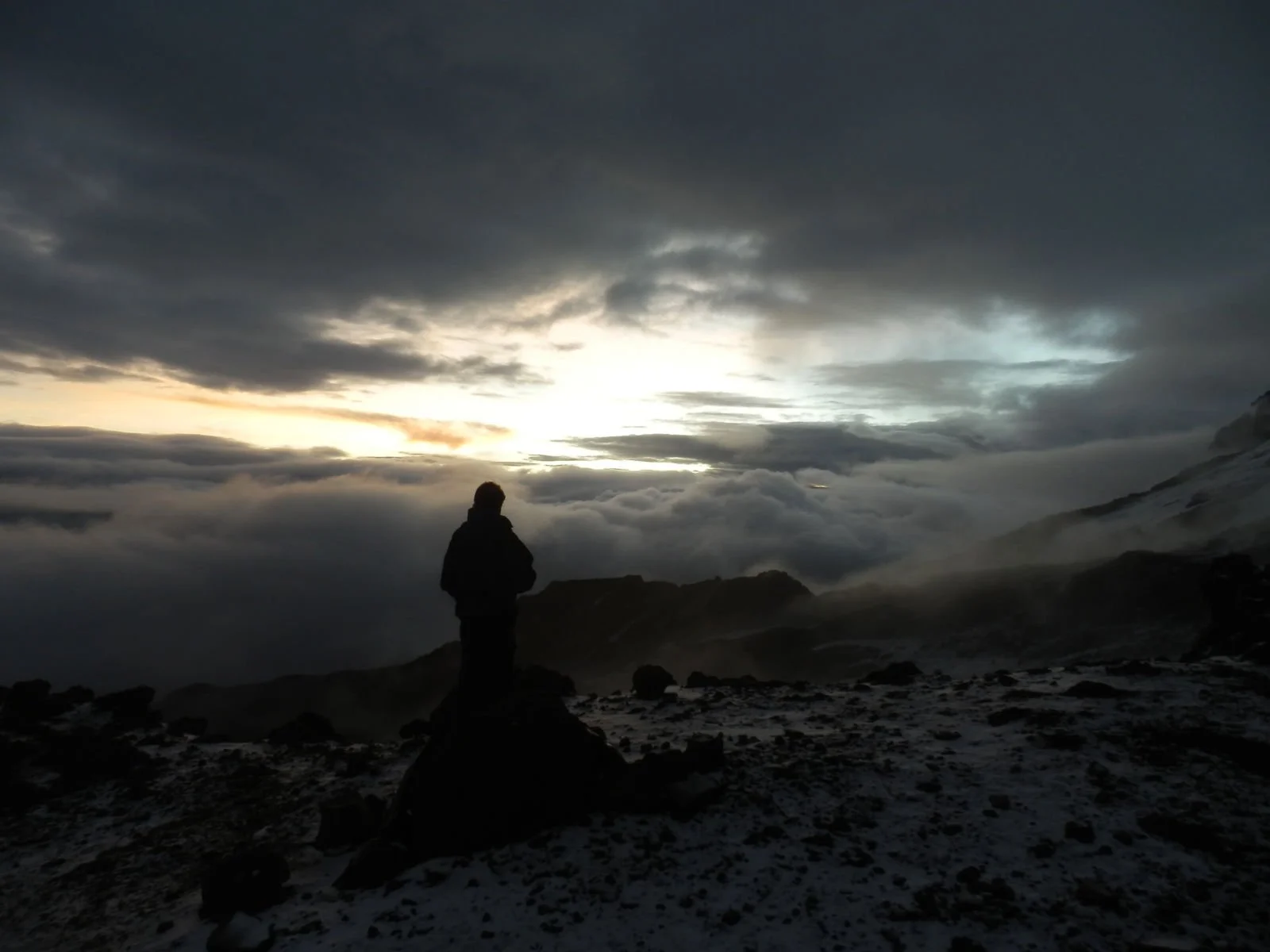
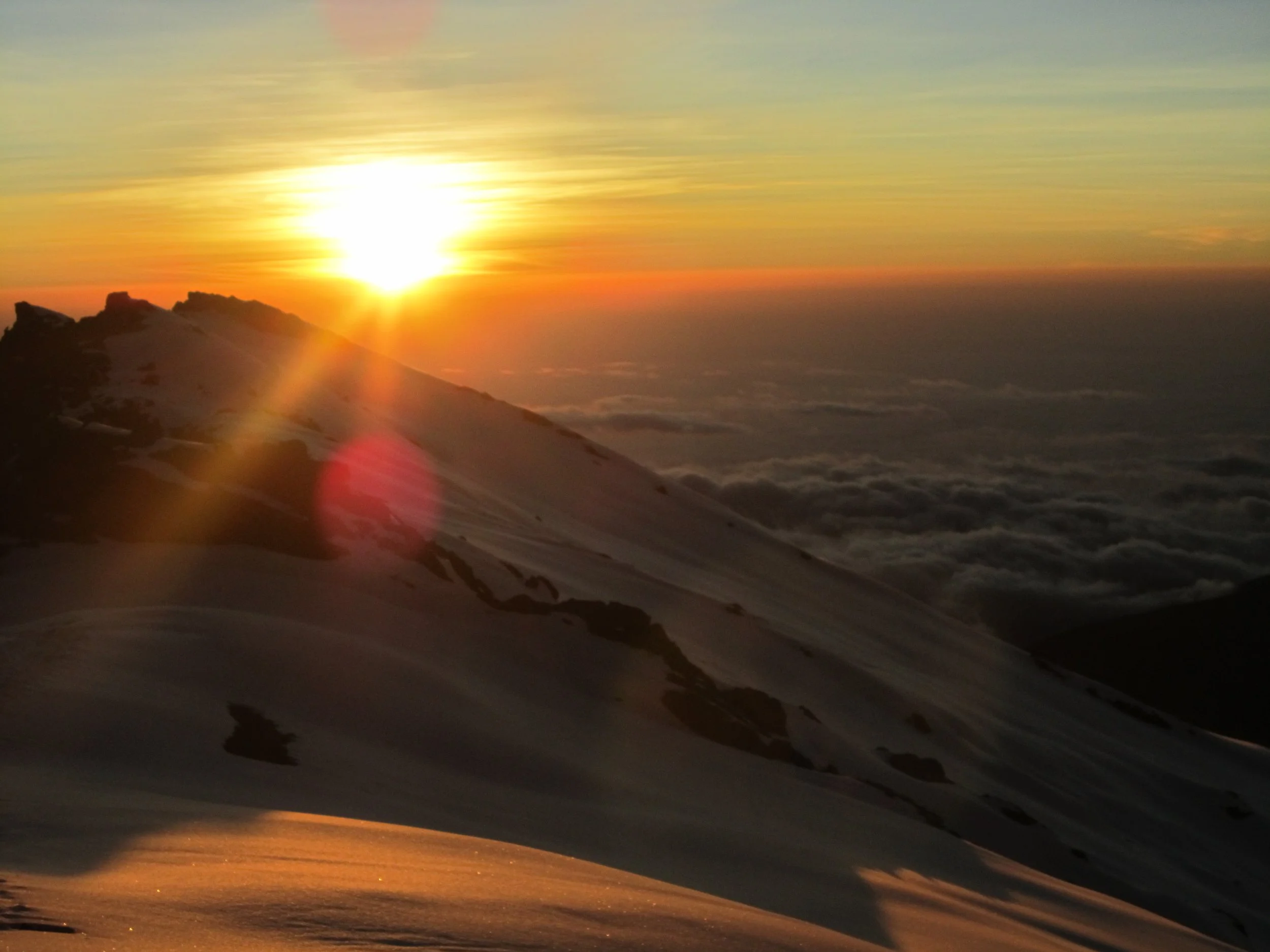
Wake around midnight and begin climbing by headlamp, switchbacking up loose scree toward Gilman's Point on the crater rim — typically the hardest two to three hours of the entire trek. From there, an hour's walk along the rim brings you to Uhuru Peak, Africa's highest point, usually just as the sun clears the horizon. After time at the summit, you'll descend the same way to Kibo Hut for a short rest, then continue down to Horombo for the night.
Sunrise from Uhuru Peak · Glacier remnants on the crater rim
DAY 6
Horombo Hut → Marangu Gate → Hotel
3,720 M → 1,860 M · 19 KM · 5-6 HOURS
A long, knee-testing descent back through moorland and rainforest to Marangu Gate, where you'll collect your summit certificate and say goodbye to your crew. Transfer back to your hotel in Moshi or Arusha for a hot shower and a proper bed — well-earned by this point.
Summit certificate ceremony at the gate
Booking the 5-day version removes Day 3 entirely. You’ll move from Horombo straight to Kibo Hut a day earlier. We’re glad to run it that way, but we’ll always recommend the 6th day first.
|
[ WHAT TO EXPECT ]
What’s actually different about this route
The huts
A-frame dormitories with bunk beds, mattresses, and shared dining halls — basic but dry, warm, and out of the wind. You'll share a room with other climbers on your trek; couples and private groups can request to be roomed together where space allows. Marangu is the only Kilimanjaro route with huts at every camp — every other route means tents.
Summit night via Gilman’s Point
Marangu and Rongai are the two routes that summit via Gilman's Point on the eastern crater rim, rather than Stella Point further south, which the tented routes use. The Gilman's approach is shorter in distance but steep and loose underfoot — a slow, deliberate climb by headlamp, then an hour along the rim to Uhuru Peak once the rim is reached.
Every Misele Kilimanjaro crew follows KPAP-aligned porter welfare standards. Read more about our crews and climbing standards on the Kilimanjaro overview page.
[ PRICING ]
Choose your trek length and comfort level
All prices are per-person estimates in USD and include the climb itself, park and hut fees, crew, and full board on the mountain. Hut accommodation is the same across tiers — the difference is your pre- and post-climb hotel standard in Moshi or Arusha.
5-DAY CLIMB · STANDARD HOTEL
From (per person)
$1,697
6 persons traveling together___________________________
1 person $2,668
2 persons $2,104
4 persons $1,759
6-DAY CLIMB · SELECT HOTEL
From (per person)
$2,108
6 persons traveling together___________________________
1 person $3,227
2 persons $2,576
4 persons $2,179
6-DAY CLIMB · PREMIUM HOTEL
From (per person)
$2,249
6 persons traveling together___________________________
1 person $3,378
2 persons $2,718
4 persons $2,319
Inclusions & Exclusions
INCLUDED
Kilimanjaro National Park fees & camping fees
Certified lead guide, assistant guides, cook & porters
Four-season mountain tents & dining tent, all nights
Full board on the mountain (all meals)
Pre- and post-climb hotel night, per selected tier
Airport & gate transfers
Emergency oxygen & first-aid kit carried by guides
Summit certificate
NOT INCLUDED
International flights
Tanzania visa
Travel & high-altitude evacuation insurance (required)
Personal climbing gear & cold-weather clothing
Guide, cook & porter gratuities
Sleeping bag & trekking poles (rentable on request)
Prices vary by season, group size, and are estimates only. Submit a request for exact figures reflecting your travel dates and group.
[ BEST TIME TO CLIMB ]
One mountain, two dry seasons
Kilimanjaro's weather windows don't change by route. Marangu follows the same two dry seasons as all other paths up the mountain: January to mid-March, and June through October, the busier and more reliable of the two.
|
Traveling in a specific month? See our full Kilimanjaro seasonal guide for month-by-month conditions. Tell us your travel dates and we can advise honestly on what to expect.
[ FAQs ]
Marangu Route FAQs
-
On the standard 5-day itinerary, success rates run lower than on longer routes, roughly 60–70% by park estimates. This is because the schedule leaves the least time to acclimatize of any route on the mountain. Adding the 6th day at Horombo raises that meaningfully, to figures closer to other 6–7 day routes. We recommend the 6-day version to nearly every client for this reason alone.
-
It's an old nickname referring to the fact that bottled drinks were historically available for purchase at the huts, and to the route's reputation as the most accessible, least technical path up the mountain. The nickname undersells the trek — it's still a genuine high-altitude climb to 5,895 m — but it's accurate in pointing to the comparative comfort of huts over tents.
-
Yes, more so than most other routes. The hut accommodation and gentler early gradients make it a frequent choice for first-time high-altitude trekkers and older climbers who'd rather not camp. That said, "easier" only applies to the lower slopes; summit night is demanding on every route, Marangu included. Reasonable fitness and an honest conversation about your health history matter more than age alone.
-
Layered clothing rated for temperatures from warm rainforest heat down to well below freezing on summit night, sturdy broken-in hiking boots, a warm sleeping bag (rentable through us), trekking poles, headlamp, and good gloves. We send every confirmed climber a detailed packing list and can arrange rentals in Moshi or Arusha for anything you'd rather not fly with.
-
It's one of our most common requests, and the logistics work well because Kilimanjaro and the northern safari circuit share the same gateway towns. Most climbers build in one or two rest days after descending before heading into the Serengeti or Ngorongoro, and a short Zanzibar stay afterward is a popular way to end the trip entirely. Ask us about pairing this route with our Northern Highlights or Into the Wild itineraries.
-
Our Kilimanjaro crews follow KPAP-aligned welfare standards: fair daily wages, enforced weight limits on loads carried, proper cold-weather gear, and adequate food and shelter at every camp. This is a fixed part of how we operate, not an upgrade — it reflects the same low-impact, locally accountable approach we bring to our safaris.
Start planning your Kilimanjaro climb
No commitment. Have a real conversation with the Misele Team about which route fits you. We know Kilimanjaro routes extensively (we live here). We will reply within 24 hours.
Your details are never shared. We respond personally, usually within a few hours.
Other Routes with Misele
Machame Route 6-7 Days
Lemosho Route 7-8 Days
Northern Highlights 3 Days