6 DAYS | KILIMANJARO CLIMBUmbwe Route
The steepest, most direct line to the summit — for experienced trekkers only
DURATION6 Days
|
DISTANCE~53 km / 33 mi
|
ACCOMMODATIONMountain Tents
|
DIFFICULTYChallenging
|
SUMMIT SUCCESS~70-75%
6-DAY CLIMB FROM$2,435 pp
Group of 6 climbers
|
RECOMMENDED FORExperienced trekkers
Prior high-altitude trek strongly advised
|
Mountain Huts
PRE/POST-CLIMB HOTELStandard · Select · Premium
Arusha or Moshi
|
BEST PAIRED WITH
Northern Highlights, Zanzibar
Post-climb safari is the most requested
[ OVERVIEW ]
Kilimanjaro’s shortest, steepest, quietest line
Umbwe climbs the mountain's southern face by the most direct route available — a steep, forested opening day followed by a dramatic ridge walk before joining the same southern circuit used by Machame and Lemosho from Barranco Camp onward. Very few operators run it and even fewer climbers choose it, which means Umbwe's camps are the quietest on the entire mountain.
We want to be direct about the trade-off: Umbwe's steep, compressed profile leaves less built-in time to acclimatize than Machame, Lemosho, or even Rongai, and its success rate reflects that. This is not a route we recommend for a first Kilimanjaro attempt or a first high-altitude trek of any kind. We're glad to guide experienced climbers up it, but we'll always ask about your trekking background honestly before confirming a booking — this route rewards genuine preparation, and we'd rather turn away a booking than set someone up for a difficult, avoidable outcome.
Steepest, most direct ascent on Kilimanjaro
Recommended for experienced trekkers only
Quietest camps on the entire mountain
Camping only
KPAP-aligned porter practices
UMBWE ROUTE IS A STRONG FIT IF
You've completed at least one prior high-altitude trek (ideally above 4,000 m)
Solitude and a genuinely uncrowded mountain matter more than summit odds
You want the shortest, most physically direct route to Uhuru Peak
You're comfortable with steep terrain and some exposure on Day 2
CONSIDER ANOTHER ROUTE IF
This would be your first Kilimanjaro attempt or first climb above 4,000 m
Maximizing your summit odds is the top priority — Lemosho or Machame rank higher
You'd prefer a gentler, more gradual acclimatization profile
You're not confident with steep, exposed terrain
Not sure Marangu is right for you? Tell us your timeframe, budget, and trekking experience and we can recommend a route that fits — even if that means pointing you to Machame or Lemosho instead.
|
[ UMBWE VS. MACHAME ]
Same final approach, very different opening days
Umbwe joins the same route Machame uses from Barranco Camp onward, so the two are a natural comparison for climbers weighing a shorter, steeper option against the mountain's most popular all-rounder. Here's the honest difference.
ROUTE
Umbwe
Machame
ACCOMMODATION
Tents
Tents
6
DAYS
6-7
~70-75%
APPROX. SUCCESS RATE
~85% (6d), ~90% (7d)
Very low
CROWD LEVEL
High
Steep, fast, dramatic. Experienced trekkers
BEST FOR
Most popular, all-rounder; varied terrain
Success rate ranges are general estimates and can vary by operator, itinerary length, season, and individual fitness.
Comparing all the Kilimanjaro routes? See our full route comparison on the Kilimanjaro overview page.
[ ITINERARY ]
Six days, no wasted distance
Umbwe has no shorter or longer variant — the itinerary below is the only version we run. Some operators offer a 5-day Umbwe that skips the Karanga Camp night; we don't offer that shortened version, for reasons we explain further down this page.
DAY 1
Umbwe Gate → Umbwe Cave Camp
1,800 M → 2,900 M · 6 KM · 5-6 HOURS · MONTANE RAINFOREST
This is Kilimanjaro's steepest opening day by a clear margin — over 1,300 vertical metres gained in a single push through dense, beautiful rainforest. The trail is narrow and quiet from the very first hour; you're unlikely to see many other climbers all day. Umbwe Cave, an old rock shelter used by hunters long before the route became a trekking path, gives the first camp its name.
Dense old-growth rainforest · Umbwe Cave rock shelter
DAY 2
Umbwe Cave Camp → Barranco Camp
2,900 → 3,900 M · 9 KM · 5-6 HOURS · HEATH & MOORLAND
The route continues up a narrow forested ridge with real exposure on both sides in places before opening into moorland, with Kibo's summit dome and the Western Breach coming into dramatic view. This is the most physically demanding day of the climb, and the reason Umbwe carries its "challenging" rating — but it's also widely considered one of the most beautiful single days on any Kilimanjaro route. You'll arrive at Barranco Camp, joining the same route used by Machame and Lemosho climbers.
The Western Breach headwall · Ridge views of Kibo
DAY 3
Barranco Camp → Karanga Camp
The day begins with the Barranco Wall — a roughly 300 m scramble up a rocky face that looks more intimidating in photos than it feels underfoot; hands are useful but no technical climbing skill is required. Beyond the wall, a shorter, gentler walk across ridges and valleys brings you to Karanga Camp. This day doubles as valuable acclimatization time after two demanding days.
3,900 M → 3,995 M · 5 KM · 4-5 HOURS
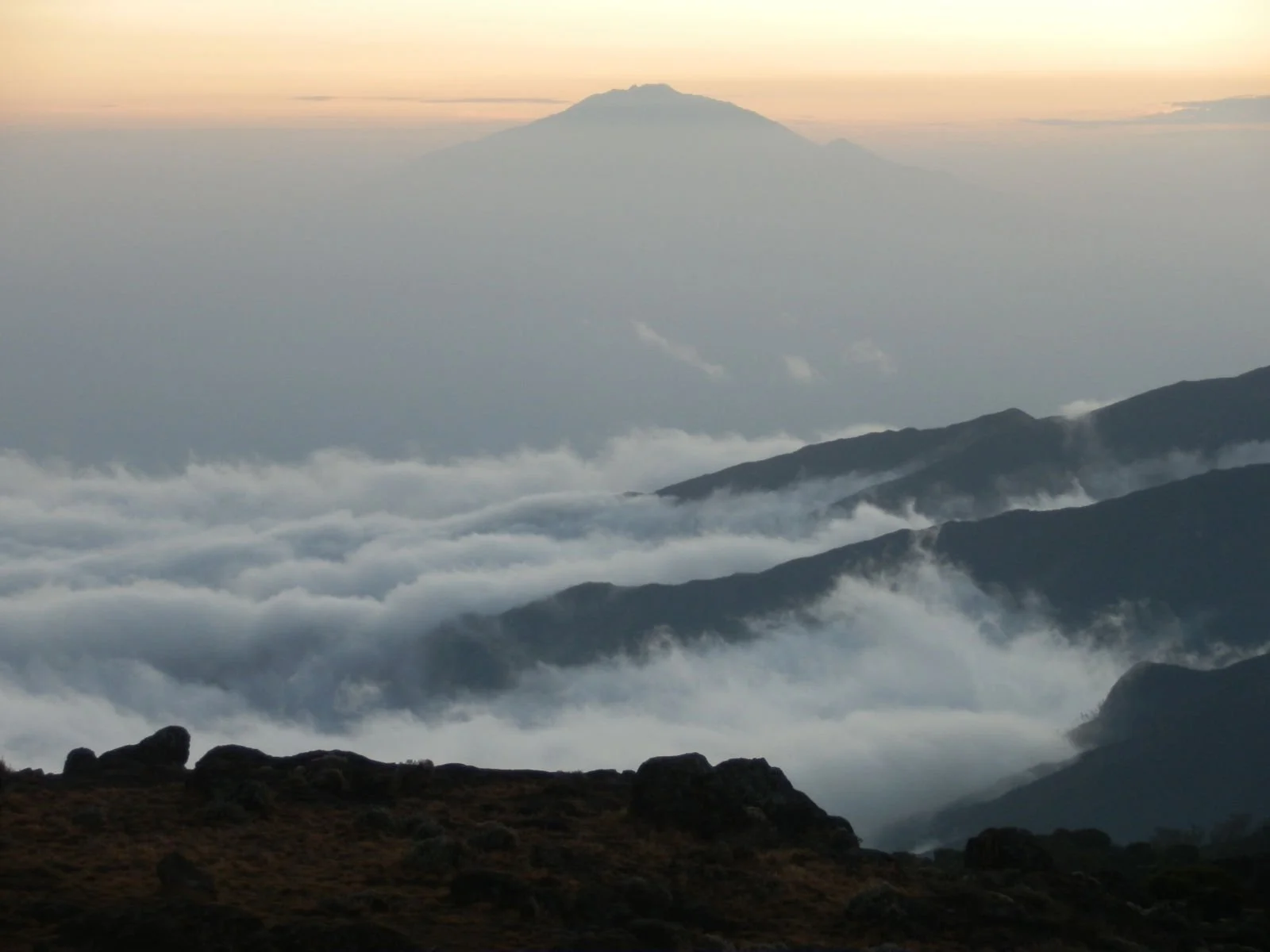
The Barranco Wall · Views back toward Mount Meru
DAY 4
Karanga Camp → Barafu Camp
3,995 M → 4,673 M · 4 KM · 3-4 HOURS · ALPINE DESERT
A short, deliberately easy day to preserve energy for what comes next. Barafu — meaning "ice" in Swahili — sits exposed on a rocky ridge with sweeping views over the Rift Valley clouds below. Guides brief the group thoroughly on summit-night logistics before an early dinner and an attempt at rest.
Barafu Ridge · Sea of clouds over the plains
DAY 5
Summit Day → Barafu Camp → Uhuru Peak → Mweka Camp
4,673 M → 5,895 M SUMMIT → DESCEND TO 3,100 M · 12-14 HOURS TOTAL
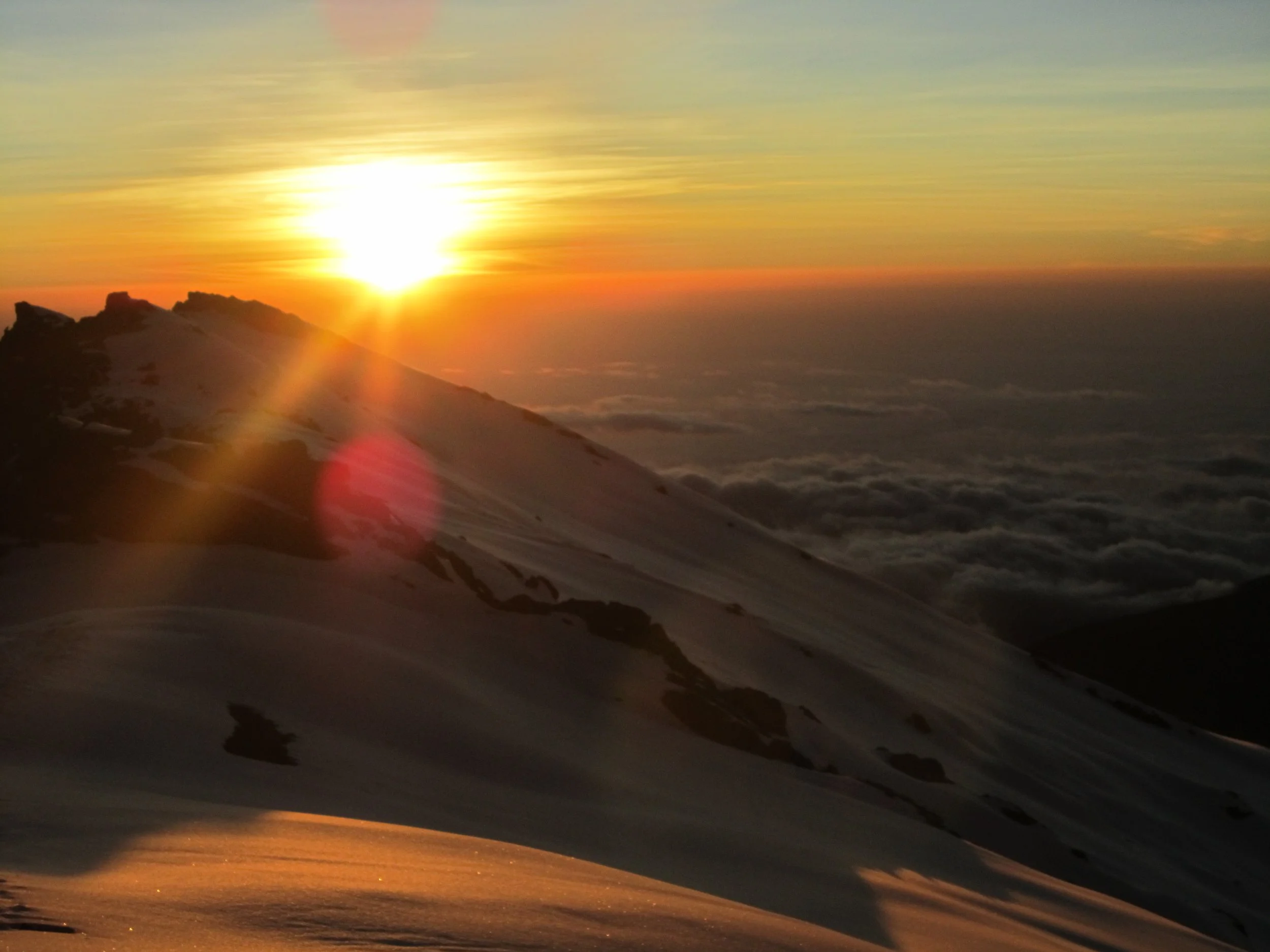
Wake around midnight and begin the summit push by headlamp, climbing steep scree switchbacks toward Stella Point on the crater rim — the hardest stretch of the entire climb, and the point where Umbwe's compressed acclimatization schedule tends to matter most. From Stella Point, a gentler hour along the rim leads to Uhuru Peak, typically reached around sunrise. After time at the top, you'll descend all the way past Barafu to Mweka Camp for a well-earned night's rest.
Sunrise from Uhuru Peak · Kibo’s remaining glaciers
DAY 6
Mweka Camp → Mweka Gate → Hotel
3,100 M → 1,640 M · 10 KM · 3-4 HOURS
A final, mostly gentle descent through thick forest to Mweka Gate, where you'll collect your summit certificate and say goodbye to your crew. Transfer back to your hotel in Moshi or Arusha for a hot shower and a proper bed — well-earned by this point.
Summit certificate ceremony at the gate
A 5-day Umbwe route skips the Karanga Camp night, going from Barranco straight to Barafu. We don't offer that version unless requested with good reason by an experienced high-altitude climber. On a route with very little built-in acclimatization to begin with, removing one of its few rest opportunities meaningfully increases risk for a modest saving in time.
|
[ WHAT TO EXPECT ]
What’s actually different about this route
The steep opening two days
Day 1 gains more elevation in a single day than any other Kilimanjaro route attempts, and Day 2 continues along a narrow ridge with genuine exposure in places. Neither day is technical climbing, but both demand solid fitness and sure footing from the start — there's no gentle warm-up period here the way there is on Machame or Lemosho.
A genuinely private mountain
Umbwe sees a small fraction of the traffic that Machame or Lemosho do. In practice this means your crew will likely be the only people at Umbwe Cave Camp, and even the shared final camps (Barranco onward) feel calmer than when reached via the busier routes. We run this route as a private climb only.
Every Misele Kilimanjaro crew follows KPAP-aligned porter welfare standards. Read more about our crews and climbing standards on the Kilimanjaro overview page.
[ PRICING ]
Choose your trek length and comfort level
All prices are per-person estimates in USD and include the climb itself, park and hut fees, crew, and full board on the mountain. Hut accommodation is the same across tiers — the difference is your pre- and post-climb hotel standard in Moshi or Arusha. Umbwe has one fixed itinerary length, so pricing varies by hotel tier only.
6-DAY CLIMB · STANDARD HOTEL
From (per person)
$2,435
6 persons traveling together___________________________
1 person $3,882
2 persons $3,030
4 persons $2,529
6-DAY CLIMB · SELECT HOTEL
From (per person)
$2,553
6 persons traveling together___________________________
1 person $4,010
2 persons $3,146
4 persons $2,647
6-DAY CLIMB · PREMIUM HOTEL
From (per person)
$2,694
6 persons traveling together___________________________
1 person $4,160
2 persons $3,287
4 persons $2,788
Inclusions & Exclusions
INCLUDED
Kilimanjaro National Park fees & camping fees
Certified lead guide, assistant guides, cook & porters
Four-season mountain tents & dining tent, all nights
Full board on the mountain (all meals)
Pre- and post-climb hotel night, per selected tier
Airport & gate transfers
Emergency oxygen & first-aid kit carried by guides
Summit certificate
NOT INCLUDED
International flights
Tanzania visa
Travel & high-altitude evacuation insurance (required)
Personal climbing gear & cold-weather clothing
Guide, cook & porter tips
Sleeping bag & trekking poles (rentable on request)
Prices vary by season, group size, and are estimates only. Submit a request for exact figures reflecting your travel dates and group.
[ BEST TIME TO CLIMB ]
One mountain, two dry seasons
Kilimanjaro's weather windows don't change by route. Umbwe follows the same two dry seasons as all other paths up the mountain: January to mid-March, and June through October, the busier and more reliable of the two. Given Umbwe's steep, exposed Day 2 ridge, dry conditions matter more here than on most other routes, so we're especially conservative about recommending it outside these windows.
|
Traveling in a specific month? See our full Kilimanjaro seasonal guide for month-by-month conditions. Tell us your travel dates and we can advise honestly on what to expect.
[ FAQs ]
Umbwe Route FAQs
-
By most operator and park estimates, Umbwe's success rate runs around 70–75% — lower than Machame, Lemosho, or Rongai. This isn't because the terrain is unmanageable; it's because the route's steep, compressed profile leaves less built-in acclimatization time than the other options. Climbers with prior high-altitude experience tend to do noticeably better on this route than first-timers.
-
It's not technical climbing at any point, but it is more physically demanding and less forgiving of altitude mistakes than the other routes. Day 2's ridge walk has real exposure in places, and the overall acclimatization schedule is tighter. With an experienced guide, sound judgment about turning back if needed, and realistic expectations going in, it's a route we're comfortable running. But it carries meaningfully more risk than Machame or Lemosho for climbers without prior altitude experience.
-
We strongly recommend it. Ideally you've completed at least one prior trek above 4,000 meters and know how your body handles altitude. This doesn't need to be another Kilimanjaro route — treks like Mount Meru, Mount Kenya, or comparable high-altitude hikes elsewhere all count. If this would be your first time at serious altitude, we'll recommend Machame or Lemosho instead, even if you specifically ask about Umbwe.
-
A 5-day Umbwe trek skips the Karanga Camp night, moving straight from Barranco to Barafu. Given how little built-in acclimatization this route already has compared with Machame or Lemosho, removing one of its few rest opportunities meaningfully raises the risk of altitude sickness for a relatively small saving in time and cost. We'd rather run the 6-day version and give you a fair shot at the summit.
-
Layered clothing rated for temperatures from warm rainforest heat down to well below freezing on summit night, sturdy broken-in hiking boots with good ankle support (particularly important given Day 2's terrain), a warm four-season sleeping bag (rentable through us), trekking poles, headlamp, and good gloves. Given the steep, sometimes uneven footing on the first two days, poles and boots you've already broken in matter more here than on the gentler routes. We send every confirmed climber a detailed packing list and can arrange rentals in Moshi or Arusha for anything you'd rather not fly with.
-
Yes, and it's a popular way to close out an Umbwe climb — Kilimanjaro and the northern safari circuit share the same gateway towns. Given Umbwe's demanding profile, we'd especially encourage building in two to three rest days after descending before heading into the Serengeti or Ngorongoro. A short Zanzibar stay afterward is also a popular way to unwind. Ask us about pairing this route with our Northern Highlights or Into the Wild itineraries.
-
Our Kilimanjaro crews follow KPAP-aligned welfare standards: fair daily wages, enforced weight limits on loads carried, proper cold-weather gear, and adequate food and shelter at every camp. This is a fixed part of how we operate, not an upgrade — it reflects the same low-impact, locally accountable approach we bring to our safaris.
Start planning your Kilimanjaro climb
No commitment. Have a real conversation with the Misele Team about which route fits you. We know Kilimanjaro routes extensively (we live here). We will reply within 24 hours.
Your details are never shared. We respond personally, usually within a few hours.
Other Routes with Misele
Machame Route 6-7 Days
Lemosho Route 7-8 Days
Rongai Route 7 Days